Thursday, November 2, 2017

FUNDAMENTALS November 2nd, 3rd (Day 19)

WARMUP

This session will mark our 16th Art Synectic Trigger investigation. When you enter class, as usual, you will acquire your sketch book and open to the next available page. The following image will be on the screen:


This work by Jasper Johns is the frame work for today's investigation. Today you will experiment with this image through the act of PARODY.

You will, on today's page, alter the image through some form of PARODY. You are being asked to spend 10 minutes copying and changing the image by providing PARODY to the images and elements in order to develop an interesting image. Consider the following in preparation for this activity:

LESSON FOR THE DAY:

The first quarter is over y'all.

Lets finish well!

FUNDAMENTALS October 31st, Novermber 1st (Day 18)

WARM UP

Acquire your accordion books and review the first five Art Synectic Triggers that we have explored.

CONTRADICT
TRANSFER
ANIMATE
SYMBOLIZE
FANTASIZE 

After reviewing the work you will determine which of your sketches has the most potential to be developed into a final artwork. You will need to have your selection made at the start of class. Be on time, be prepared, and be smart about your choice. you are going to take your chosen sketch and refine it into a finished drawing.

LESSON FOR THE DAY

1.

The FIRST task is a 6x9 pencil drawing based on the example of Art Synectics that you chose from your accordion book. This work will require you to examine your sketch and develop a large final drawing based on the specific Art Synectic trigger represented. For your reference before beginning this drawing you will need to understand the following expectations:
  • Your drawing must clearly show the original image altered to highlight the Art Synectic trigger.
  • Your drawing must fill the entire picture plane.
  • Your drawing must be well crafted and free from unsightly errors
  • Your drawing must show evidence of original thought and risk taking.

2.

Today we will continue our experiment in observational drawing. Yesterday you composed your hands in transition across a field of practice drawings. You finished by emphasizing these hands with white paint. Let us again look at an example of the eventual finished product.

Lets examine this drawing in order to clarify what will take place in class today.
  1. You can see the background is made up of a variety of drawings, much the same as you created during our last session.
  2. The five hands in the foreground are an example of what you will produce today.
  3. The five hands are organized to fill the picture plane.
  4. The five hands are posed to show gradual transition from each to the next.
  5. The hands in transitions are painted white in order to emphasize them from the background images.
  6. The hands are further re-stated in colored pencil to enhance the contrast and emphasis of the subject matter.
We will begin class by re-stating the lines and contours of the hands in transition in order to complete the artworks.

You will then need to write an artist statement that reflects upon the learning that took place during this process. You can see the artist statement graphic organizer her, it will look familiar.
We will organize our thoughts in small groups before the critique. You and your peers will look at the finished work to determine...

How do we break the piece down into parts for understanding?
If you were to do a series or a variation on this piece what would it look like?
How could you change the medium and materials to change the effect of the final piece?
What advantages are there to drawing within constraints? (think about how the background was produced.)
Which compositions are strong and successful and why?

Friday, October 27, 2017

FUNDAMENTALS October 27th, 30th (Day 17)

WARM UP

This session will mark our 15th Art Synectic Trigger investigation. When you enter class, as usual, you will acquire your accordian book and open to the next available page. The following image will be on the screen:

This drawing by Giorgio DiChirico is in line with our previous examples of LINE from the history of art. Today you will experiment with this image through the act of FANTASIZING.

You will, on today's page, alter the image through some form of FANTASY. You are being asked to spend 10 minutes copying and changing the image by developing FANTASY in the elements in order to generate an interesting image. Consider the following in preparation for this activity:

LESSON FOR THE DAY

Today we will continue our experiment in observational drawing. Yesterday you drew your hand from observation a great many times. Today, you only need to draw five hands.  While continuing to draw hands can seem frustrating lets look at an example of the eventual finished product.
teacher example

Lets examine this drawing in order to clarify what will take place in class today.
  1. You can see the background is made up of a variety of drawings, much the same as you created during our last session.
  2. The five hands in the foreground are an example of what you will produce today.
  3. The five hands are organized to fill the picture plane.
  4. The five hands are posed to show gradual transition from each to the next.
  5. The hands in transitions are painted white in order to emphasize them from the background images.
  6. The hands are further re-stated in colored pencil to enhance the contrast and emphasis of the subject matter.
We will draw to start class and paint to finish. The colored pencil will be added next session after the paint has dried.


Mr. Voelker

Monday, October 23, 2017

FUNDAMENTALS October 23rd, 24th (Day 15)

WARM UP

This session will mark our 13th Art Synectic Trigger investigation. When you enter class, as usual, you will acquire your accordian book and open to the next available page. The following image will be on the screen:

This drawing by Edward Hopper is in line with our previous examples of LINE from the history of art. Today you will experiment with this image through the act of ANIMATION.

You will, on today's page, alter the image through some form of ANIMATION. You are being asked to spend 10 minutes copying and changing the image by ANIMATING the elements in order to develop an interesting image. Consider the following in preparation for this activity:

LESSON FOR THE DAY


AFTER PARTY

Towards the end of our session we will pause for SMALL group critique of the works produced.

We will, at this time, use the seesaw app to upload images of our artwork and continue building a digital portfolio. If you have not yet downloaded the seesaw app please do so as soon as possible.

Remember to come prepared for class with a sharpened pencil.

Mr. Voelker


Wednesday, October 12, 2016

FUNDAMENTALS October 25th,26th (Day 16)

WARM UP

This session will mark our 14th Art Synectic Trigger investigation. When you enter class, as usual, you will acquire your accordian book and open to the next available page. The following image will be on the screen:

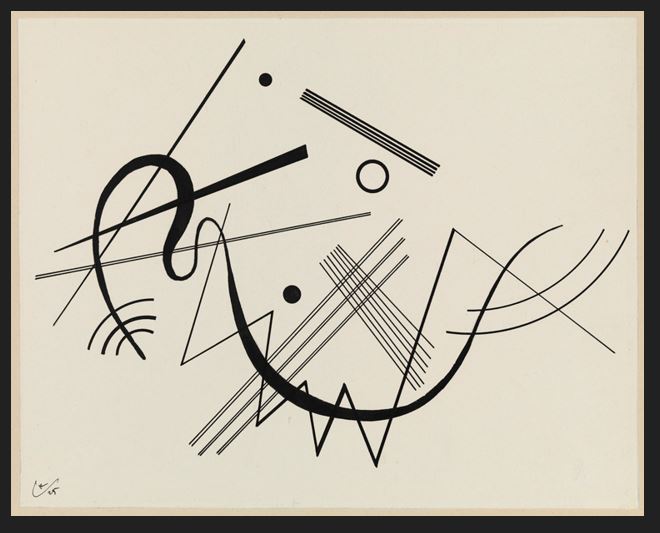
This drawing by Wassily Kandinsky is in line with our previous examples of LINE from the history of art. Today you will experiment with this image through the act of SYMBOLIZING.

You will, on today's page, alter the image through some form of SYMBOLIZING. You are being asked to spend 10 minutes copying and changing the image by SYMBOLIZING the elements in order to develop an interesting image. Consider the following in preparation for this activity:

LESSON FOR THE DAY

Today we will begin an experiment in observational drawing. You will be asked to participate in a number of drawing tasks, some familiar and some foreign. As this lesson will require you to draw in response to a number of surprise constraints not all will be revealed here.

What can be known is the following:

You will have a 12x18 inch sheet of paper.
You will put a 1 inch border on the paper.
You will draw your hand from observation... a lot.

AFTER PARTY


We will, at this time, use the seesaw app to upload images of our artwork and continue building a digital portfolio.

Remember to come prepared for class with a sharpened pencil.

Mr. Voelker


Wednesday, October 5, 2016

FUNDAMENTALS October 18th, 19th (Day 14)

WARM UP

This session will mark our 12th Art Synectic Trigger investigation. When you enter class, as usual, you will acquire your accordian book and open to the next available page. The following image will be on the screen:

This drawing by Paul Klee is in line with our previous examples of LINE from the history of art. Today you will experiment with this image through the act of TRANSFERING.

You will, on today's page, alter the image through some form of TRANSFERENCE. You are being asked to spend 10 minutes copying and changing the image by TRANSFERING the elements in order to develop an interesting image. Consider the following in preparation for this activity:

LESSON FOR THE DAY:

Where are you now?

HOW HAVE YOU ORGANIZED AND DEVELOPED ARTISTIC IDEAS AND WORK?

HOW HAVE YOU DEVELOPED AND REFINED ARTISTIC TECHNIQUES AND WORK FOR PRESENTATION?


Class will revolve around determining where we have finished in this artistic endeavor. You will apply criteria to evaluate your performance and determine where you are now with your finished painting.

You will need to grade yourself based on the following rubric:

You will be generating an Artist statement that details what learning took place throughout this endeavor.  As you can see from above the statement is a part of the final grade.

AFTER PARTY

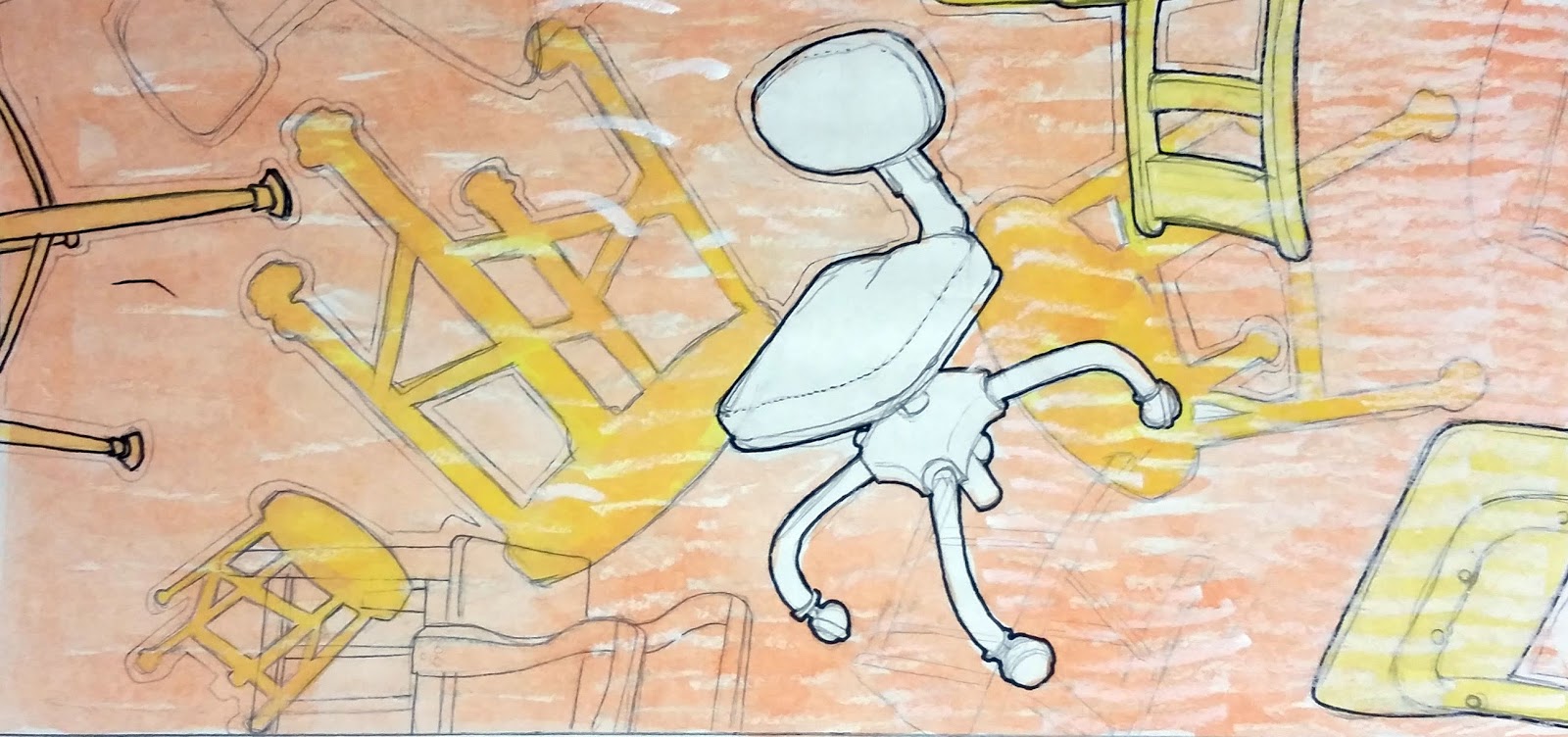
We will have a full class critique of the finished Chairs Chairs Everywhere compositions
Come prepared for class with a sharp pencil and a sharp intellect.

Mr. Voelker

Sunday, October 2, 2016

FUNDAMENTALS October 16th, 17th (Day 13)

WARM UP

This session will mark our 11th Art Synectic Trigger investigation. When you enter class, as usual, you will acquire your accordian book and open to the next available page. The following image will be on the screen:

This drawing by N.C. Wyeth is in line with our previous examples of LINE from the history of art. Today you will experiment with this image through the act of CONTRADICTION.

You will, on today's page, alter the image through some form of CONTRADICTION. You are being asked to spend 10 minutes copying and changing the image by CONTRADICTING the elements and ideas in order to develop an interesting image. Consider the following in preparation for this activity:

LESSON FOR THE DAY

Where are you now?

HOW HAVE YOU ORGANIZED AND DEVELOPED ARTISTIC IDEAS AND WORK?

HOW HAVE YOU DEVELOPED AND REFINED ARTISTIC TECHNIQUES AND WORK FOR PRESENTATION?

You have a composition with:


  • 5 different views
  • 4 positive chair drawings
  • 3 negative chair drawings
  • 2 different chairs
  • 1 chair of emphasis

TODAY:

You will finish the application of color to the drawing you composed last week. The criteria for the color composition are as follows:
  • 4 hues
  • 3 pen outlines
  • 2 pencil outlines
  • 1 instance of personal creativity
See the image below as an example for clarification:


You will need to grade yourself based on the following rubric:
Class will revolve around determining where we have finished in this artistic endeavor. You will apply criteria to evaluate your performance and determine where you are now with your finished painting.


AFTER PARTY

We will clean the studio and exhibit work for critique.

Come prepared for class with a sharp pencil and a sharp intellect.

Mr. Voelker